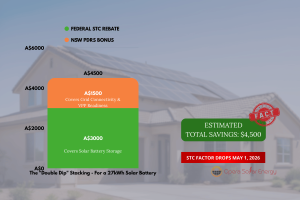
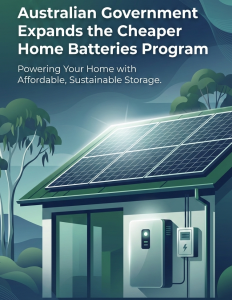
The Battery Rebate Drops in 2026: Don’t Miss Out on Up to $1,700 in Savings

Federal Budget 2026 and Sporting Club Energy Grants: What Australian Community Clubs Need to Know

Australian sporting clubs are under increasing financial pressure. Rising electricity prices, ageing facilities, and growing operational costs are making it harder for local clubs to invest in their communities while maintaining affordable memberships for everyone. At the same time, the 2026 Federal Budget has delivered stronger support for clean energy upgrades, energy efficiency programs, battery incentives, and electrification initiatives across Australia. Combined with specialised funding pathways such as the Smart Ease Sporting Club Energy Grant program, many Australian clubs now have a great opportunity to upgrade their facilities while drastically reducing their long-term operating costs. For sporting clubs across NSW and Australia, this is a rare opportunity where government support, solar technology, and energy savings align exceptionally well.

Sporting Club Energy Grant. A-League Grand Final at AAMI Park, Melbourne, Australia

Why Energy Costs Are Becoming a Concern for Sporting Clubs

Many sporting clubs operate from facilities that were built many years, in fact, decades ago. Lighting systems, hot water units, canteen equipment, refrigeration, air conditioning, and pool infrastructure often consume large amounts of electricity every day.

Common high-energy-use facilities include:

  • Football and rugby clubhouses
  • Cricket clubs
  • Tennis centres
  • Bowling clubs
  • Netball associations
  • Swimming centres
  • Basketball stadiums
  • Community recreation halls


Electricity demand spikes particularly during:

  • Evening training sessions
  • Weekend competitions
  • Summer cooling periods
  • Large community events

For some clubs, ever rising power bills now represent one of the largest ongoing operational expenses outside staffing and maintenance.

This is where solar and battery systems are becoming increasingly valuable and a long-term asset. Instead of remaining exposed to volatile electricity pricing, clubs can generate and store their own energy while improving long-term financial stability.

What the 2026 Federal Budget Means for Community Energy Projects

The 2026 Federal Budget placed a stronger national focus on:

  • Renewable energy adoption
  • Grid resilience
  • Electrification
  • Battery storage
  • Community energy upgrades


One of the biggest outcomes for organisations and sporting facilities is the continued expansion of energy efficiency support programs and clean energy financing pathways.

For community sporting clubs, this means:

  • Larger access to funding assistance
  • Improved financing flexibility
  • Lower barriers to solar and battery installation
  • Faster ROI on renewable energy projects


The federal government’s continued support for battery adoption all across Australia is particularly important because many clubs operate largely during the evening hours when solar panels alone may not provide adequate power supply to meet their massive demand.

Battery storage allows clubs to:

  • Store excess daytime solar energy
  • Offset expensive evening peak tariffs
  • Improve backup resilience
  • Reduce dependence on the grid during major events


As electricity infrastructure costs continue surging nationwide, clubs that invest early in energy independence are likely to be in a far stronger financial position over the next decade.

Understanding the Smart Ease Sporting Club Energy Grant

The Smart Ease Sporting Club Energy Grant initiative has gained attention because it focuses specifically on helping sporting organisations access funding support and energy upgrade pathways.

Many clubs delay solar projects because they assume:

  • Upfront costs are too high
  • Grant applications are too complicated
  • Financing is difficult
  • Energy projects require large capital reserves

In reality, modern funding structures have become much more flexible.

Programs connected to energy grants and financing pathways can help clubs explore:

  • Solar panel systems
  • Battery storage
  • LED lighting upgrades
  • Energy-efficient appliances
  • HVAC improvements
  • Electrification upgrades

For sporting organisations operating on tight budgets, this can dramatically reduce the financial pressure of upgrading facilities.

In many situations, clubs may find that:

  • Monthly energy savings offset repayment structures
  • Operational costs reduce almost immediately
  • Long-term budgeting becomes more predictable and practical

This is especially crucial for volunteer-run organisations where cash flow certainty matters enormously.

Why Solar Makes Sense for Sporting Clubs

Sporting clubs often have one major advantage that makes solar extremely effective: large roof space.

Clubhouses, indoor courts, gyms, and pavilions frequently provide ideal rooftop conditions for commercial solar systems.

These larger rooftops allow clubs to install systems capable of generating substantial daytime electricity.

Typical energy consumption areas include:

  • Floodlighting
  • Refrigeration
  • Bar operations
  • Kitchen equipment
  • Air conditioning
  • Pool pumps
  • Scoreboards
  • EV charging infrastructure

A properly engineered solar system can offset a significant portion of these operational costs.

For clubs operating during daytime hours, solar directly reduces imported electricity usage. For clubs with heavy evening activity, battery systems can further improve savings by storing daytime production for later use.

At Opera Solar, we are increasingly seeing sporting facilities explore integrated systems that combine:

  • Solar generation
  • Battery storage
  • Smart monitoring
  • Demand management
  • Future EV readiness


This creates a far more resilient long-term energy strategy.

Battery Storage Is Becoming Increasingly Important

Historically, many commercial solar projects focused only on daytime solar generation.

However, battery technology is rapidly changing the equation.

Sporting clubs are ideal candidates for battery storage because many activities occur:

  • After school
  • During evenings
  • On weekends
  • During peak electricity tariff periods


Battery systems help clubs reduce exposure to expensive evening electricity pricing while increasing self-consumption of solar-generated energy.

Modern commercial battery systems can also provide:

  • Backup power capability
  • Energy load balancing
  • Peak demand reduction
  • Smarter energy automation


For facilities operating refrigeration, security systems, emergency lighting, or electronic access systems, backup resilience is becoming increasingly valuable.

With federal battery support programs continuing to evolve, the economics of battery adoption are improving rapidly across NSW and Australia.

The Long-Term Financial Benefits for Australian Clubs

One of the biggest misconceptions about solar is that it only delivers environmental benefits.

In reality, the strongest driver for most sporting clubs is financial sustainability.

Energy upgrades can help clubs:

  • Reduce operational overheads
  • Improve cash flow
  • Free up funds for equipment and facilities
  • Invest more into junior development
  • Reduce pressure on memberships and fees


Over time, lower electricity costs may allow clubs to redirect savings toward:

  • Coaching programs
  • Facility improvements
  • Community events
  • Grassroots participation
  • New sporting equipment


For volunteer committees and community organisations, predictable operating costs are enormously valuable.

Why Proper Solar and Battery System Design Matters

Not all commercial solar systems are equal.

Sporting facilities often have:

  • Complex usage patterns
  • Large evening loads
  • Multiple switchboards
  • High-demand equipment
  • Future expansion requirements


This means system design should always begin with proper site engineering analysis.

Important considerations include:

  • Daytime vs evening energy use
  • Battery sizing
  • Roof orientation
  • Structural capacity
  • Grid export limitations
  • Seasonal demand patterns
  • Future electrification plans


At Opera Solar, commercial energy projects are designed keeping long-term operational goals in mind.

The right system should balance:

  • Financial return
  • Reliability
  • Future scalability
  • Energy independence
  • Maintenance simplicity

Community Clubs Are Becoming Energy Leaders

Across Australia, community sporting organisations are increasingly becoming leaders in sustainability and renewable energy adoption.

This shift is driven by both:

  • Economic necessity
  • Community responsibility


Modern sporting facilities are now exploring:

  • Solar-powered clubhouses
  • Battery-backed community centres
  • EV charging stations
  • Energy-efficient lighting systems
  • Smart energy monitoring


For clubs seeking grants, sponsorships, or community partnerships, visible sustainability initiatives can also strengthen public perception and long-term stakeholder support.

Final Thoughts

The combination of the 2026 Federal Budget energy initiatives and programs like the Smart Ease Sporting Club Energy Grant creates a major opportunity for Australian sporting clubs.

With electricity prices continuing to rise, many clubs are now realising that investing in solar and battery infrastructure is no longer simply an environmental decision — it is a long-term operational strategy.

For sporting organisations across NSW, the right energy system can help:

  • Lower operational costs
  • Improve financial stability
  • Increase energy independence
  • Support future growth
  • Strengthen community resilience


As technology improves and energy incentives continue evolving, clubs that act early are likely to secure the greatest long-term advantages.

If your sporting club is exploring solar, battery storage, or energy upgrade opportunities, Opera Solar can help assess your facility, energy usage, and long-term savings potential.

0 0 votes
Article Rating
Subscribe
Notify of
guest
0 Comments
Oldest
Newest Most Voted
Inline Feedbacks
View all comments
0
Would love your thoughts, please comment.x
()
x
The Battery Rebate Drops on 1 Jan 2027: Don’t Miss Out on Huge Savings Up to A$6,800
Get Rebate
The Battery Rebate Drops on 1 May 2026: Don’t Miss Out on Up to A$16,400 in Savings
Get Rebate
Lisa

Lisa

I will be back soon

Lisa
Hey there 👋
It’s Lisa from Opera Solar Energy. How can I help you?
WhatsApp