


Australians are asking in Reddit communities rather than focusing only on government announcements: what a battery costs after the rebate, how long it takes to pay for itself, which installers to trust, and whether the financial benefits live up to the sales pitch.
This guide answers the most important questions raised in Reddit discussions, explains the relevant government incentives and explores what homeowners and commercial property owners should check before investing.
*Information checked against government sources available in October 2026. Incentives, eligibility and calculations can change; always confirm the rules that apply to your installation.
1. How much rebate is available in NSW right now?
One of the first questions homeowners ask on their initial call is: how much money will the government actually contribute towards a battery?
The answer depends on whether the installation qualifies under the federal Cheaper Home Batteries Program, a relevant NSW incentive or another eligible assistance program.
How much is the home battery rebate in NSW in 2026?
The Australian Government’s Cheaper Home Batteries Program provides a discount of around 30% on eligible small-scale battery installations. It applies to qualifying residential and non-residential installations, including eligible batteries connected to new or existing solar systems.
However, the discount is not a guaranteed 30% reduction on every quote. Changes introduced on 1 May 2026 mean that the incentive calculation tapers for larger batteries. Eligible systems must generally have a nominal capacity of at least 5 kWh and no more than 100 kWh, while small-scale technology certificates are available for the first 50 kWh of usable capacity, subject to program requirements.
For example, someone considering a 10 kWh battery should not assume they will receive the same dollar discount as someone installing a 40 kWh battery. Eligible capacity, certificate calculation, and installation price all affect the final amount.
Are there separate NSW battery rebates for businesses?
Yes. NSW has introduced the Batteries for Businesses Incentive to help eligible businesses reduce the upfront cost of battery installations.
The program supports eligible batteries from 20 kWh to 30 MWh. The discount varies by installation and applicable rules, with additional support potentially available when solar and battery systems are installed together. The scheme is intended for eligible NSW businesses, not residential buildings or data centres. Requirements also vary by system size, approved equipment, installation accreditation, and planning approvals.
A business installing a large battery cannot simply use a residential rebate calculator and assume the result will be accurate.
Can NSW homeowners receive additional assistance?
Some NSW households qualify for additional assistance through state energy programs, depending on their circumstances and the rules in force. However, customers should distinguish between a grant, an upfront rebate, a loan and a virtual power plant incentive. These arrangements have different financial implications and conditions.
Do not assume that two incentives can automatically be combined. Check the terms of each scheme and call us to know more.
2. Is a home battery worth it after the rebate?
This is one of the most important questions in Australian solar discussions. A government discount reduces the upfront cost, but it doesn’t automatically make every battery a worthwhile investment.
In a May 2026 discussion, one user asked for actual electricity bill results rather than sales estimates. The conversation focused on how much people had paid for their systems, whether their bills had fallen and whether a battery offered enough additional value compared with solar panels alone.
Read the discussion: People with solar and batteries — what are your actual results?.
The financial answer depends on several factors:
- How much electricity the household uses after sunset.
- How much excess solar energy is available to charge the battery.
- The price paid for electricity imported from the grid.
- The feed-in tariff received for exporting excess solar power.
- Battery efficiency, usable capacity and installation cost.
- Whether the household participates in an eligible virtual power plant.
A household that regularly exports substantial excess solar energy and purchases expensive electricity at night may benefit more than a household that already uses most of its solar generation during the day. Contact us if you are confused about going solar; our expert team will do a free home energy assessment.
How do you calculate a battery’s payback period?
A simple starting point is to divide the net installation cost by the estimated annual financial savings.
Suppose a battery costs $10,000 after applicable incentives and is expected to generate annual savings of 2,000–2,500 through reduced electricity bills and better use of stored solar energy.
The simple payback period would be:
- $10,000 ÷ $2,500 = 4 years
- $10,000 ÷ $2,000 = 5 years
The battery could pay for itself in approximately 4–5 years, depending on energy usage, electricity tariffs and the value of solar energy stored and used.
A more detailed calculation should also account for changes in electricity tariffs, battery degradation, maintenance, financing costs and the value of solar electricity that could otherwise have been exported.
Send us your electricity bill, and we’ll help estimate your potential battery savings and whether a 4–5 year payback period is achievable for your property.
3. Why are NSW homeowners questioning battery installation quotes?
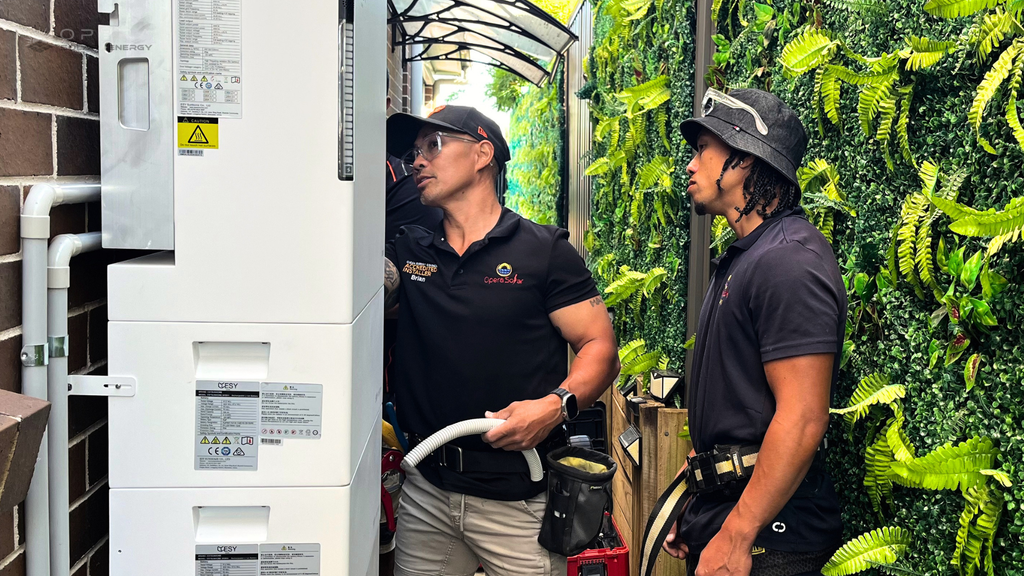
Another recurring Reddit question is why apparently similar solar and battery systems can have very different prices.
In December 2025, a Sydney homeowner posted three solar and battery quotes priced at approximately $12,510, $20,250, and $17,761. The homeowner wanted to understand which quote offered fair value after federal rebate and small-scale technology certificate discounts.
Read the discussion: Solar quotes with large price differences.
The example highlights an important point: the cheapest quote is not necessarily the best comparison, and a more expensive quote is not automatically better.
Before comparing offers, check:
- Battery capacity: Compare usable capacity, not just the advertised nominal capacity.
- Inverter specifications: Confirm compatibility with the existing solar installation and household electrical supply.
- Installation costs: Check whether electrical upgrades, switchboard work and removal of old equipment are included.
- Backup capability: Determine whether the system can supply selected circuits or the whole house during an outage.
- Warranty terms: Review the product warranty, performance conditions and installation workmanship coverage.
- Rebate calculations: Confirm exactly which incentives have been deducted and whether the quoted price is conditional on participation in a particular program.
4. Can a homeowner get a battery rebate without installing new solar panels?
This question is especially relevant to people who already have rooftop solar.
Under the federal Cheaper Home Batteries Program, an eligible battery can generally be installed alongside a new solar system or connected to an existing compliant solar photovoltaic system. A household does not necessarily need to replace its existing solar panels simply to add a battery.
However, batteries that only store electricity from the grid, without an eligible solar photovoltaic connection, are not eligible under the federal program.
The existing solar installation, inverter and new battery must satisfy the relevant technical and safety requirements. The battery system and installation must also meet applicable accreditation and approved-product requirements, which we handle for our customers.
5. How much can commercial customers save with NSW battery rebates?
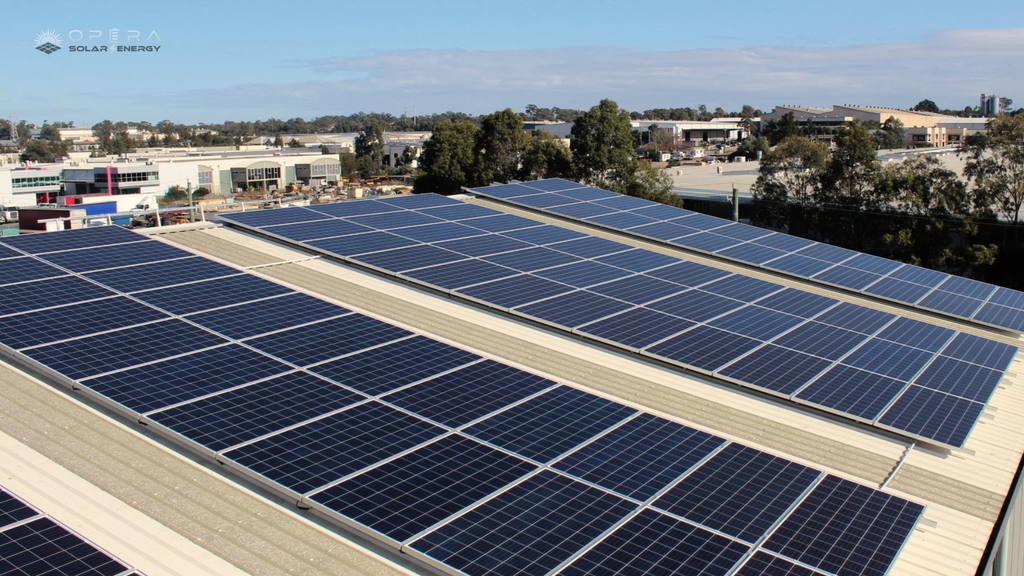
Commercial customers need a different assessment from residential customers because their electricity usage, tariffs and financial objectives can vary substantially.
The NSW Batteries for Businesses Incentive supports eligible business battery installations from 20 kWh to 30 MWh. The amount of assistance depends on the project and the applicable requirements.
For a business, the key question is not how much the government contributes. It is how the battery affects the total cost of operating the property.
Can a battery reduce electricity bills for a small business?
Potentially, yes.
A business with substantial daytime solar generation may store surplus electricity and use it later, reducing the amount purchased from the grid. A business with expensive peak-period consumption may also benefit from shifting some electricity use to lower-cost periods.
However, the result depends on the business’s load profile, tariff structure, solar generation and battery operating strategy.
A business that consumes most of its solar energy immediately may have a different investment case from a business that uses large amounts of electricity after sunset.
Can a commercial battery reduce demand charges?
Some commercial electricity tariffs include charges based on peak demand. A suitably sized and controlled battery may reduce the amount of electricity a site draws from the grid during certain peak periods.
The benefit depends on the tariff, the timing of peak demand and the battery’s power output and available stored energy. A battery that is too small, discharged too early or poorly controlled may not deliver the expected reduction.
Businesses should examine interval-meter data and model likely operating conditions before committing to a project.
How should a business calculate its return on investment?
Commercial battery calculations should include the net installation cost after eligible incentives, expected bill savings, demand-charge reductions where applicable, maintenance and battery degradation.
Any revenue from energy exports or VPP participation should be assessed separately and treated according to the actual contract rather than assumed to be guaranteed.
A site-specific assessment is particularly important for larger installations because a small difference in the assumptions can materially change the projected return.
6. Can apartment buildings and owners corporations access battery incentives?
Apartment buildings face different challenges from detached homes. A shared battery may support common property electricity use or other eligible applications, depending on how the system is configured. The owners corporation must consider the installation’s purpose, the allocation of costs and benefits, maintenance responsibilities and the building’s electrical infrastructure.
NSW has introduced a specific incentive pathway for eligible residential apartment battery installations under the Peak Demand Reduction Scheme. Eligibility is determined by the relevant scheme rules, so owners corporations should not assume that every shared battery project qualifies.
7. What should NSW homeowners check before accepting a battery rebate offer?
Based on the concerns raised in Reddit discussions, buyers should focus on five practical checks.
First, confirm eligibility. Ask which government program applies and whether the proposed battery, installer and installation meet its requirements.
Second, request an itemised quote. The final price should clearly show equipment, installation work, discounts and any additional charges.
Third, compare expected savings with actual energy use. A realistic estimate should use household consumption, solar generation and electricity tariffs rather than generic savings claims.
Fourth, review the contract and warranty. Understand the product coverage, installation obligations, backup capabilities and any VPP participation conditions.
Finally, compare competing offers. Similar battery capacities can be offered at different prices, so make sure the comparison accounts for the equipment, installation scope and expected performance.
The federal program also requires participating retailers to provide information about expected savings, battery sizing and payback periods. Customers should keep copies of quotes, written estimates and relevant correspondence.
What do Reddit discussions tell us about battery rebates in NSW?
Reddit offers a useful window into the questions people ask when government incentives meet real installation decisions.
The discussions reviewed point to several recurring concerns:
- Is the discount large enough to justify the upfront investment?
- Why do installation quotes vary so much?
- Will the battery reduce electricity bills enough to pay for itself?
- What control does a VPP provider have over a home battery?
- How can commercial customers calculate savings beyond the rebate?
These are useful indicators of customer questions, but they do not represent every NSW household or business. The Reddit examples span different dates, locations and energy systems, and some relate to Australian experiences outside NSW.
The available discussions also provide less direct evidence about the volume of commercial customer conversations than about residential battery purchases. That limitation should be recognised rather than assuming that a lack of indexed posts means a lack of commercial demand.
NSW homeowners and commercial customers’ questions about battery rebates ultimately come down to value. Homeowners want to know whether a battery will reduce their bills, whether their quote is fair and whether they will retain enough control over their stored electricity. Businesses need to understand how incentives interact with energy costs, demand charges and the financial returns of a larger installation.
Before making a decision, obtain comparable quotes, verify the applicable incentives and request a savings estimate based on actual energy data. The most useful battery rebate is the incentive that helps make a suitable, properly priced system financially worthwhile for the property using it. Have questions? Feel free to ask Opera Solar Energy. We’re happy to help without any sales pressure. Book your consultation today!