darkgray-mallard-260384.hostingersite.com

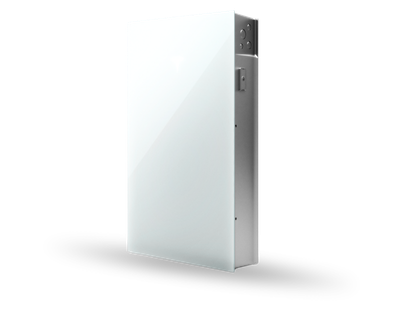
In 2026, for Australian property owners, the Tesla Powerwall 3 has shifted from a discretionary upgrade to a strategic financial asset. Currently priced between $14,500 – $16,500 (supply only), the unit’s net cost is greatly subsidised under the Federal “Cheaper Home Batteries” rebate scheme, which offers approximately $3,700 in upfront STC discounts till one 14kWh battery until December 31. However, the federal rebate is confirmed to go through a significant drop on January 1st, 2027 with a strict “tapering rate” for multi-unit clusters, significantly penalising large installations.
Usable Energy
Continuous Power
Solar-to-Grid Efficiency
Older solar arrays relied heavily on traditional P-type cell technology. While this was historically reliable, it presented noticeable efficiency limitations. Canadian Solar has transitioned their premium production lines to advanced N-Type cell architectures to future-proof their product range.
Because the solar inverter is built-in, you don’t need a separate box to convert solar power for household use, reducing the ‘conversion tax’. The 6 solar inputs let installers design six different panel groups to catch sun at different times of day, all feeding one battery.
LFP is far more stable than the NMC chemistry in previous models, allowing 100% Depth of Discharge — you can use the entire 13.5kWh every night without prematurely wearing out the battery.
Pairing two units gives 27kWh and double the power output, the sweet spot for an EV household. Stacking four units reaches the 54kWh residential maximum per gateway, effectively creating a private microgrid for large estates.
Tesla backs the Powerwall 3 with a comprehensive manufacturer warranty. Confirm the exact current terms and conditions with your installer, as coverage details can be updated by Tesla over time.
Yes — it has a high-efficiency solar inverter built-in, so if you’re getting a new solar system, you don’t need a separate inverter box.
The PW3 is about 1.1 metres tall and 60cm wide. Full mounting clearances are detailed in the official Powerwall 3 datasheet.
With more accessible financing options, payback for high-usage homes is usually 5–7 years. Its IP67 flood resistance also makes it one of the few batteries safely installable in low-lying areas.
While it’s a single-phase unit, it works with 3-phase homes via Net Metering, monitoring all three phases and backing up the most critical one.
Federal STC rebates apply per unit, and NSW residents can ‘double dip’ with the PDRS VPP incentive ($550 single / $1,500 dual unit). WA and ACT also offer additional stackable rebates or low-interest loans.
Yes — up to four units link together per gateway, reaching 54kWh of usable energy for an ‘off-grid experience’ suited to large estates or businesses that can’t afford downtime.
Contact us at the Consulting WP office nearest to you or submit a business inquiry online.