
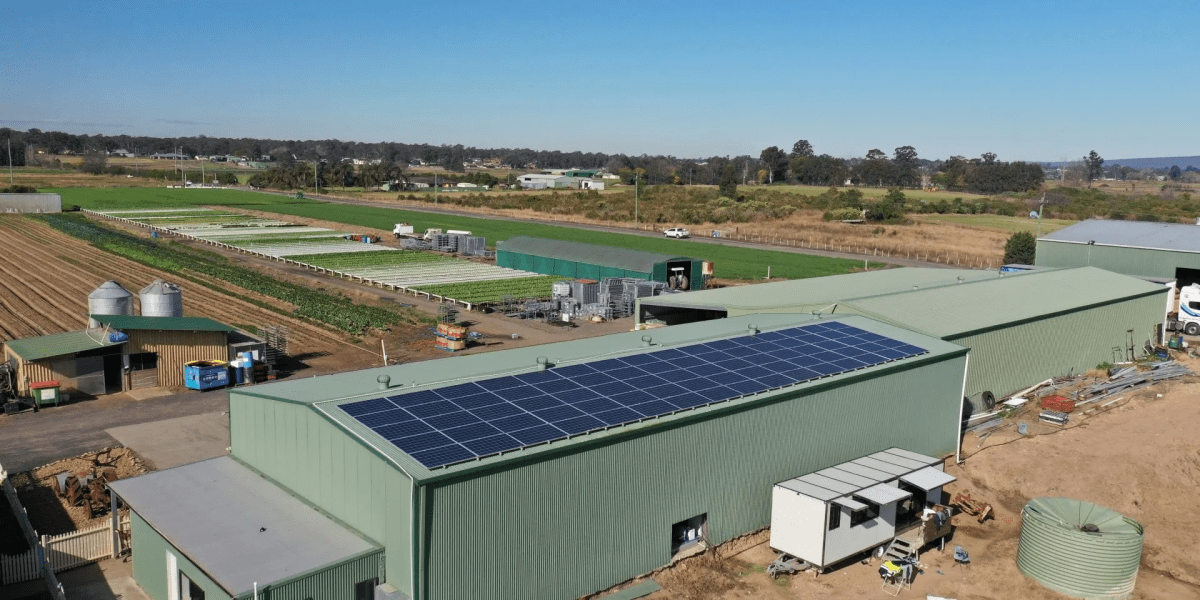
Project Snapshot: Achieving $0 Bills and Medical-Grade Backup
In this 2025 case study from Agnes Banks, NSW, Opera Solar replaced a weather-damaged 11-year-old system with a next-generation setup featuring AIKO ABC solar panels and a massive 48kWh Sigenergy Sigenstor battery. Designed for a client heavily reliant on a medical oxygen concentrator, the system provides 0ms UPS backup and easily bypasses Endeavour Energy’s export limits by storing excess solar on-site. The result was a 99% reduction in grid electricity usage and a $220.90 credit on their most recent quarterly Energy Australia bill.
Client Location: 12 Crowleys Ln, Agnes Banks NSW 2753.
Network & Retailer: Endeavour Energy / Energy Australia.
System Installed: AIKO Solar Panels paired with a 48kWh Sigenergy SigenStor Battery.
The Challenge: The client required absolute, unbroken power reliability for vital medical equipment, alongside an upgrade from legacy panels that had suffered severe weather degradation.
Financial Outcome: The quarterly Energy Australia bill dropped to an “Amount Due” of $0, generating an account credit of $220.90 through massive self-consumption and solar exports.
The Client & The Problem
Fred has been with Opera Solar for over a decade. We actually installed his first solar setup 11 years ago at his property in Agnes Banks, out on the edge of the Hawkesbury region. That original system did a great job for a long time, quietly chipping away at his power bills. However, a decade of Western Sydney hail, fierce storms, and 40-degree summers eventually took a toll. The old panels were heavily degraded and simply couldn’t keep up with his daily energy needs anymore.
But Fred had a much more pressing issue than just paying high energy bills. He relies on an oxygen concentrator for his health. Out in Agnes Banks, which sits on the Endeavour Energy network, grid dropouts and brownouts are just a reality you have to deal with. For Fred, a blackout isn’t just an inconvenience where the fridge gets warm. It is a serious medical risk.
He asked us to strip the old system off the roof and start fresh. He needed deep storage, the most efficient panels available today, and an absolute guarantee that his medical equipment would stay on if the street power dropped out.
System Design: The "Why 48kWh?" Question
When people hear “48kWh battery,” they usually assume it is for a commercial farm or a massive mansion. Most standard residential homes install a 10kWh to 13kWh battery to cover their evening cooking and TV usage. So, why did we design a 48kWh system for Fred?
It all came down to load profiling and “autonomy” (how long the house can survive without the sun or the grid).
An oxygen concentrator is a continuous draw. It runs all day and all night. When you add that to a standard household’s summer air conditioning loads, a standard 10kWh battery would be completely flat by midnight. If a severe storm knocked out the Endeavour Energy grid for two or three days, which happens in the Hawkesbury, Fred would be left without power.
By sizing the battery at 48kWh, we gave Fred massive autonomy. He can run his house and his medical equipment for multiple days without seeing a single ray of sunshine and without drawing a drop of power from the grid.

The Solution: What We Installed
We designed a heavy-duty system to completely isolate his home from grid unreliability.
- The Panels: AIKO Solar
We replaced the old array with high-efficiency AIKO solar panels. We chose AIKO because they use All Back Contact (ABC) technology, meaning they don’t have the standard silver grid lines across the front of the glass. This allows them to absorb more sunlight and handle partial shading much better than older panels.
Crucially for Agnes Banks, they handle extreme heat incredibly well. Standard panels lose a lot of efficiency when they get hot. AIKO ABC panels have an industry-leading temperature coefficient of -0.26%/°C. When the roof bakes in the middle of summer, these panels keep pumping out high wattage while older technology chokes.
- The Battery Powerhouse: 48kWh Sigenergy SigenStor Battery
To give Fred absolute peace of mind, we installed a massive 48kWh Sigenergy SigenStor Battery tower.
Instead of bolting four or five heavy, separate battery boxes all over his garage walls, the SigenStor modules stack neatly on top of each other in a single vertical column. It takes up less floor space than a fridge but holds an industrial amount of power.
More importantly, the SigenStor has a 0ms UPS-grade switchover. If the street power cuts out, the battery inverter takes over so fast that it is technically instantaneous. His medical equipment, router, and appliances don’t even flicker.
The Installation & Overcoming Network Limits
Installing a system this size isn’t just a matter of plugging it in. When you put that much solar capacity on a roof, you hit a bottleneck with the local power distributor.
Endeavour Energy has strict rules regarding how much solar power a single-phase residential home can export back to the grid, typically capping it at a fixed 5kW limit. If we just put a massive solar system on Fred’s roof without a large battery, the inverter would be forced to throttle down, and most of that clean power would be totally wasted.
The 48kWh Sigenergy SigenStor Battery stack acts as a giant sponge. We programmed the system’s smart meter to strictly obey Endeavour Energy’s export limits, but instead of throwing the excess solar away, it dumps all that power straight into the battery stack.
During the installation, our electricians also carried out a comprehensive switchboard upgrade. We physically separated his “essential” circuits (like the oxygen concentrator, fridge, and lights) onto the Emergency Power Supply (EPS) side of the Sigenergy inverter. This ensures that even in a catastrophic grid failure, the hardware knows exactly where to send the battery power first.
The Results: A $0 Bill

The real test of any solar and battery installation is the power bill. Fred recently received his summer bill from Energy Australia, covering a 92-day period from late October 2025 to late January 2026.

The numbers are brilliant:
- 99% Drop in Grid Usage: Fred’s reliance on the grid almost vanished. Over the entire three-month billing cycle, he pulled an average of just 0.09 kWh per day from the grid. That cost him a total of $3.69 in peak usage charges for the entire quarter.
- Heavy Solar Exports: Even with the AIKO panels filling up a giant 48kWh Sigenergy Sigenstor battery every morning, the system still produced a massive surplus. Fred exported 4,120.97 kWh back to the grid. That is an average of 44.79 kWh exported every single day.
- Earning Money: At his 4c/kWh feed-in tariff, those solar exports earned him a credit of $164.84.
When you combine his solar export credits with his NSW Government Rebate for the oxygen concentrator ($187.15), his daily supply charges of $127.41 were completely covered.
Fred’s “Amount Due” for the quarter was exactly $0.
In fact, Energy Australia owes him money. His account is currently sitting $220.90 in credit.
Looking Ahead
For Fred, this upgrade delivered exactly what we promised. It wasn’t just about chasing a zero-dollar power bill, though achieving a $220 credit in the middle of summer is a fantastic financial result.
It was about securing energy independence. With 48kWh Sigenergy battery storage sitting in his garage and a highly efficient AIKO array on his roof, Fred no longer has to worry about Endeavour Energy’s grid stability. He has complete financial freedom from retail price hikes, and most importantly, he has the absolute peace of mind that his critical medical equipment will keep running, no matter what the weather throws at Agnes Banks.