Project Snapshot: Off Grid Solar System Middle Dural Installation Leading to Complete Independence
This Off Grid Solar System Middle Dural project demonstrates the transition of a high-load semi-rural estate from 100% grid reliance to a net-credit financial position. By deploying a commercial-grade 17kW array and 32kWh of modular storage, we eliminated a monthly energy liability of $374.62.
The Financial Transformation:
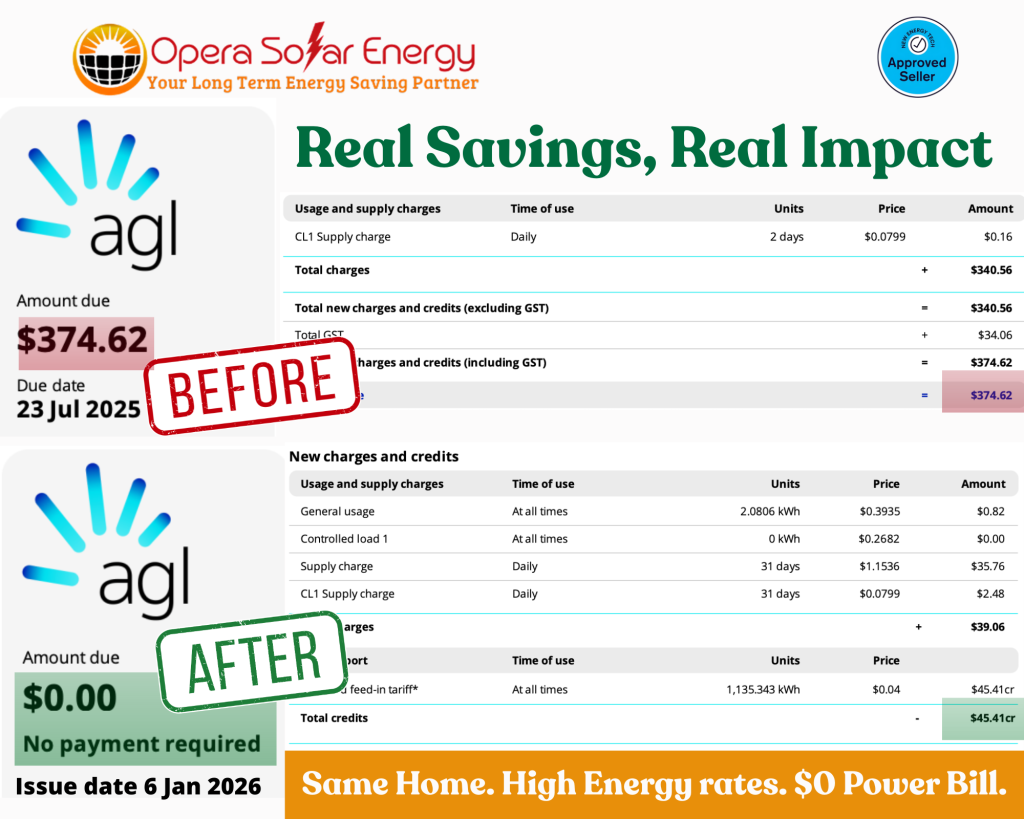
- Before (July 2025): $374.62 Monthly Bill | 29.75 kWh/day average import.
- After (January 2026): $0.00 Bill ($45.41 Account Credit) | 0.07 kWh/day average import.
- Grid Independence: 99.8% autonomy achieved during summer peak.
Technical Configuration:
- Generation: 17kW AIKO Neostar ABC (All-Back Contact) technology.
- Storage: 32kWh Sigenergy SigenStor (Modular 3-Phase Stack).
- Logic: DC-coupled architecture with native “Island Mode” capability for zero-export network constraints.
The Outcome: Through the strategic over-sizing of the DC array and storage capacity, this Middle Dural estate now operates as an independent power station, insulating the owner from future tariff hikes while generating a monthly surplus.
Middle Dural is a sparsely populated suburb in Sydney. It has a unique energy environment. For properties in the 2158 postcode, power isn’t just about keeping the lights on; it’s about running high-draw bore pumps, extensive HVAC systems for large floor plans, and maintaining estate infrastructure. When Stephen contacted Opera Solar in July 2025, his property was a textbook case of a “Grid Dependent” estate. He was facing a July 2025 winter bill of $374.62, driven by a daily average consumption of 29.75 kWh.
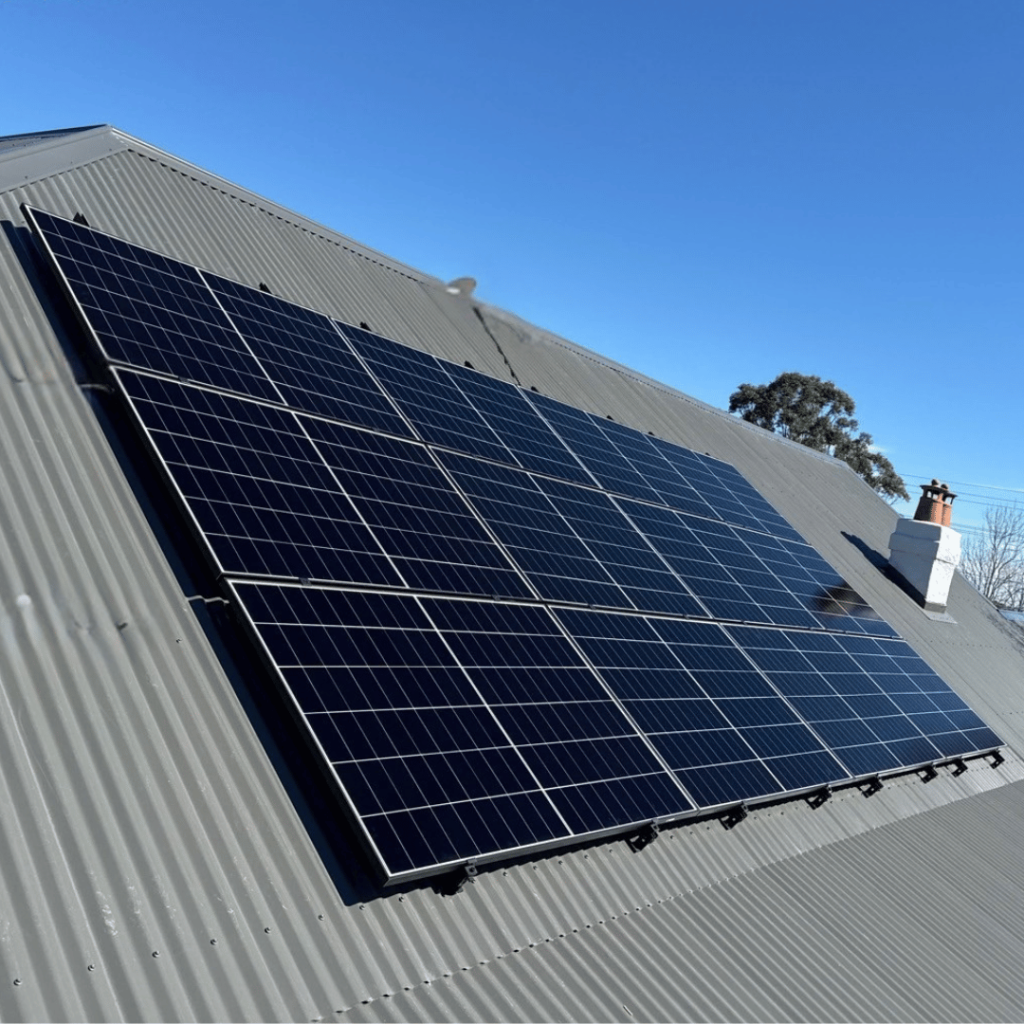
For many, a $400-a-month bill is just accepted as the “cost of living” on acreage. But from an engineering perspective, that bill represents a failure of efficiency. Our goal wasn’t just to lower that bill, but to fundamentally change how the property interacted with the Endeavour Energy network.
The 2025 Site Audit: Why Winter Was Winning
In July, the energy profile of a Dural home is at its most vulnerable. The days are shorter, the sun sits lower in the sky, and heating loads are at their peak. Stephen was 100% reliant on the grid because he had no way to capture the limited winter sun and save it for the long nights.
During our 2025 site audit, we identified that a standard 6.6kW or even a 10kW system would be insufficient. To achieve a $0 electric bill, we had to over-spec the generation to account for “grey days” and ensure the storage capacity could carry the home’s “base load” (the power used just to keep the house idling) through a 14-hour winter night.
Selecting the "Power Horse": 17kW of AIKO Neostar ABC Technology
We landed on a 17kW array using AIKO Neostar panels. In the solar world, there is a lot of talk about AIKO Neostar vs Maxeon. While both are premium, the AIKO All-Back Contact (ABC) technology was the clear winner for this project.
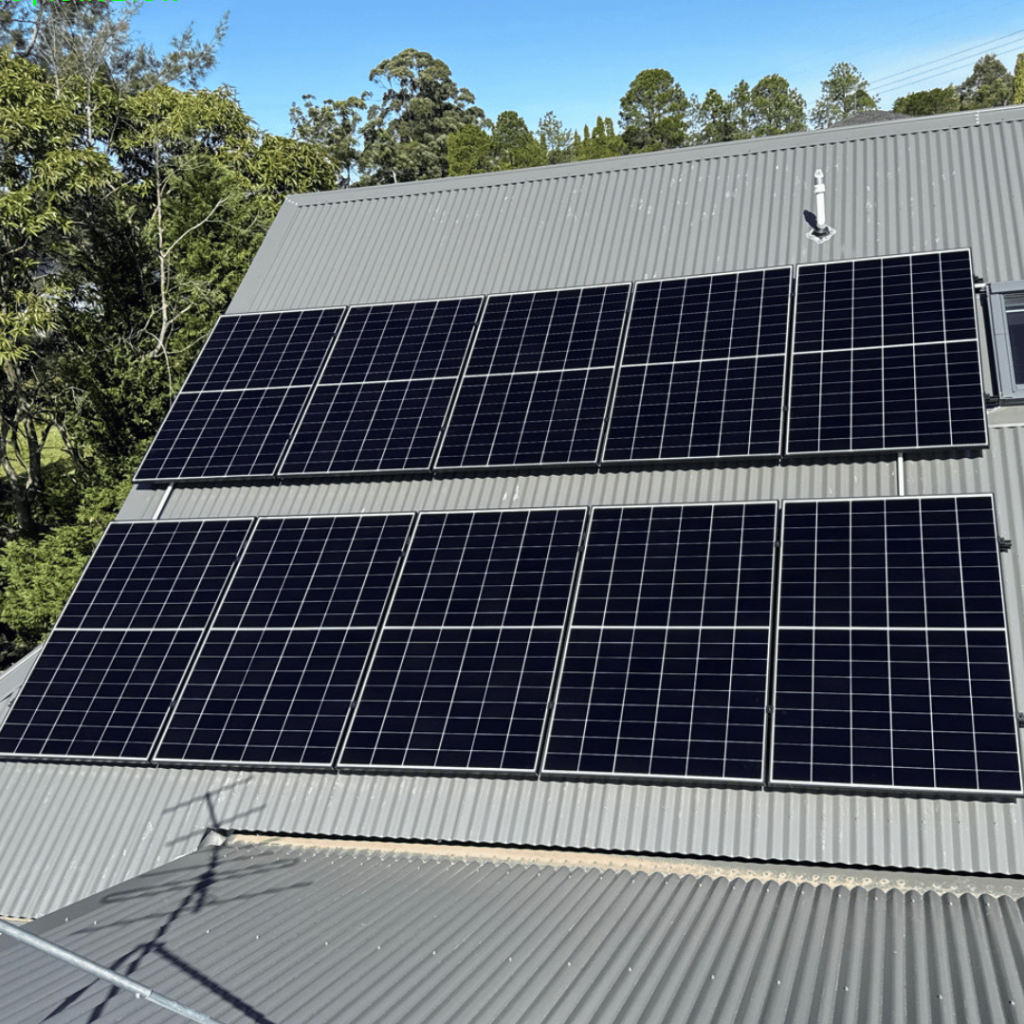
Standard solar panels have silver metal lines (busbars) on the front. These lines actually shade the cells, reducing the amount of light that can be turned into electricity. AIKO’s ABC design moves all those contacts to the back. This gives the panel a pure black, “Obsidian” look, but more importantly, it increases the light-absorption area. When you are trying to squeeze every watt out of a winter afternoon in Dural, that extra surface area is the difference between a charging battery and a flat one.
Furthermore, these panels have a superior temperature coefficient. Even though Dural is semi-rural, summer roof temperatures can still soar. Cheaper panels “wilt” in the heat, losing up to 15-20% of their rated output. The AIKO panels stay productive, ensuring the 1,135 kWh summer surplus we saw in January 2026 was actually possible.
The Storage Powerhouse: 32kWh Sigenergy SigenStor
The battery is where the “Grid Independence” happens. We deployed a 32kWh Sigenergy SigenStor stack. For homeowners researching the Sigenergy SigenStor price Australia-wide, the modularity is the key selling point.
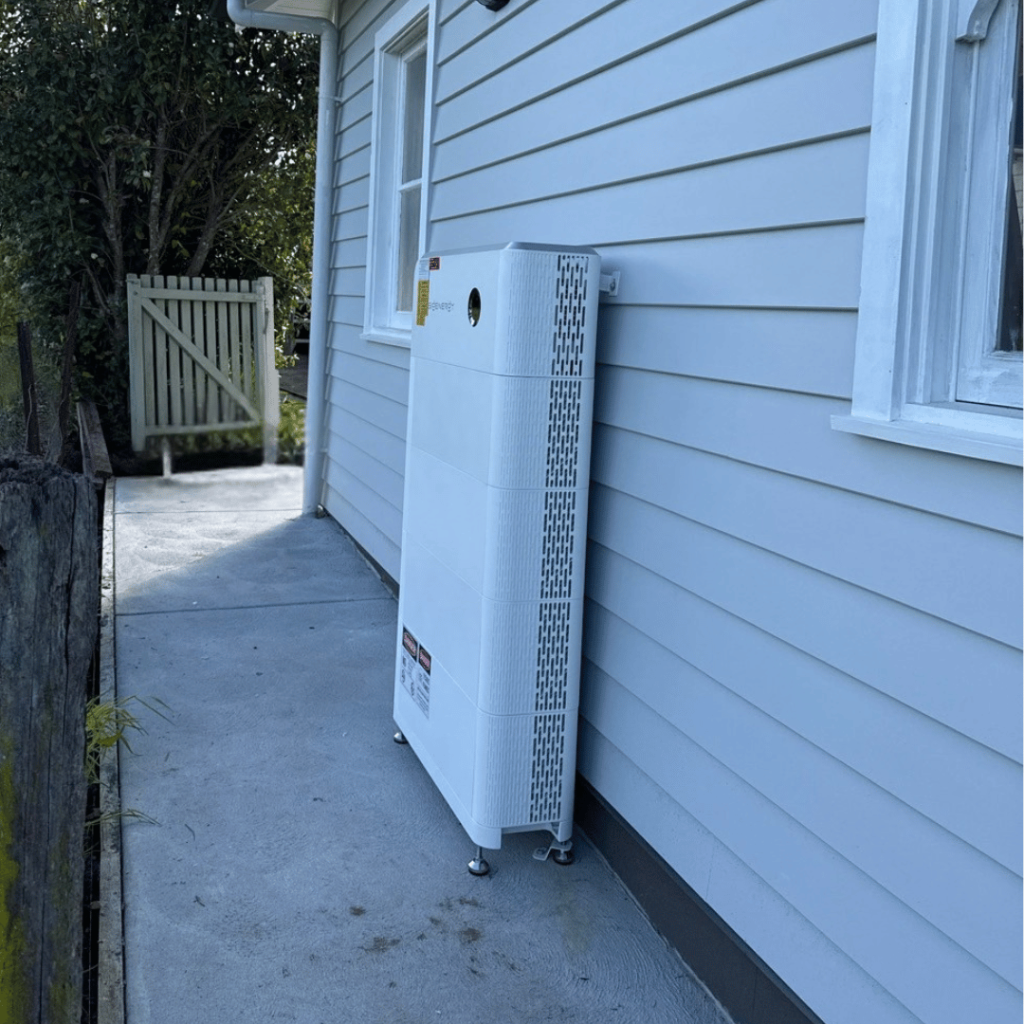
Most batteries are a “one-size-fits-all” box. The SigenStor is a stack of modules. This allowed us to build a 32kWh reserve, nearly triple the size of a standard residential battery.
- Why 32kWh? A Dural estate uses power differently. You might have a guest house, a workshop, or a pool heater. If you only have 10kWh of storage, you’ll run out by 9:00 PM. By installing 32kWh, we ensured Stephen had a “deep tank” of energy.
- 3-Phase Balancing: Since Stephen has a 3-phase supply, we had to ensure the battery could discharge across all three phases equally. The Sigenergy system does this natively, preventing “phase imbalance” where you might be exporting power on one wire while buying it back on another.
Solving the "Voltage Rise" Trap
One of the biggest hidden enemies in Middle Dural is Voltage Rise (the 258V trip). When a lot of houses in a rural street have solar, the grid voltage can get pushed too high. When it hits 258V, the inverter is legally required to shut down to protect the grid.
This means on the sunniest days, when you should be making the most money, your system might be turned off. We solved this by using Sigenergy’s Smart AI. The system monitors the grid voltage in real-time. Instead of just “dumping” power into a full grid, it prioritizes filling the 32kWh battery or running the home’s heavy loads (like the pool pump) to keep the voltage stable. This is the difference between “slapping panels on a roof” and “commercial-grade solar engineering.”
The Results: Data-Led Proof
By January 2026, the performance data was undeniable. Stephen’s grid reliance dropped to 0.2%.
- Daily Average Import: 0.07 kWh (virtually zero).
- Summer Surplus: 1,135 kWh exported.
- The Bill: $0.00, with a **$45.41 credit**.
This wasn’t just about the summer sun. Because we installed a 17kW array, even on a rainy day, the system generates enough “ambient” light power to keep the battery topped up. This is the “headroom” strategy that Opera Solar builds into every large-scale project.
Future-Proofing for EV Charging and VPPs
Although Opera Solar doesn’t manage retail contracts, we made sure Stephen’s system was VPP-Ready. The Sigenergy hardware has built-in high-speed communications. If Stephen decides to join a program like Endeavour Energy – Flexible Exports or Amber Electric SmartShift, his system can talk directly to the energy markets.
He is also ready for the EV transition. The SigenStor has a dedicated DC-to-DC charging port. This means if he buys an Electric Vehicle, he can charge it directly from his solar panels without converting the power to AC and back to DC, a process that usually wastes 10-15% of the energy.
Built for the Postcode 2158 Environment
Finally, we addressed the physical reality of living in Dural. Acreage systems face more wind and dust than city systems.
- Mounting: We used 316-grade stainless steel hardware. In the humid, often damp environment of the Hills District, standard galvanized bolts can tea-stain and rust within years.
- Wind Loading: We calculated the rail spans to meet AS/NZS 1170.2 standards, ensuring that the 17kW array stays exactly where it is during the fierce East Coast Lows that occasionally lash the region.
Conclusion: Turning an Expense into an Asset
Stephen’s project is a blueprint for the modern NSW estate. By choosing to invest in a premium solar and battery system in 2025, he has insulated himself from the rising costs of 2026. He isn’t just saving money; he has increased the capital value of his property by making it an independent power station.
A $0 bill isn’t a myth, it’s the logical outcome of the right panels, the right battery, and the right solar engineering.
