
When researching LONGi solar panels in Australia, property owners quickly discover that LONGi is the world’s largest manufacturer of monocrystalline silicon wafers. They supply core silicon to many competing brands, ensuring strict quality control across the global supply chain. This comprehensive guide explores their 2026 technology. By utilising Hybrid Passivated Back Contact (HPBC) 2.0 architecture, LONGi achieves module efficiencies exceeding 24 per cent.
Key Takeaways for LONGi Solar in 2026:
The Australian solar market is often a race to the bottom on price. For Opera Solar, the focus remains firmly on engineering truth. LONGi Solar has established itself as the benchmark for silicon production. They do not merely assemble panels. They define the silicon standards that the rest of the industry follows.
This bankability is a major factor for homeowners in suburbs like Norwest and Chatswood. When you invest in a 30-year performance warranty, you require the manufacturer to exist for three decades from now. LONGi holds a 100 per cent bankability rating. Their R&D investment, representing over 5 per cent of their operating income, provides that necessary corporate security.
They have delivered over 70 gigawatts of wafers globally in a single year. This vertical integration allows them to supply core components to rival brands while reserving their latest innovations for their own modules.
The core of the 2026 residential range is the LONGi Hi-MO X10 series. This hardware utilises the second-generation Hybrid Passivated Back Contact technology. To understand why this matters for your power bill, we must look at the physics of the cell.
Standard cells lose energy when electrons recombine before they can be captured. HPBC 2.0 uses hydrogen passivation and a submicron texture to prevent this loss. As a result, the peak cell efficiency reaches 24.4 per cent from a smaller physical footprint.
By moving the silver busbars to the back, LONGi has removed the visible grid look from the front of the panel. Those silver lines on traditional panels physically block sunlight.
In the HPBC 2.0 design, the entire front surface is active silicon. This increases light absorption significantly compared to older P-type modules and provides a clean aesthetic for modern properties.
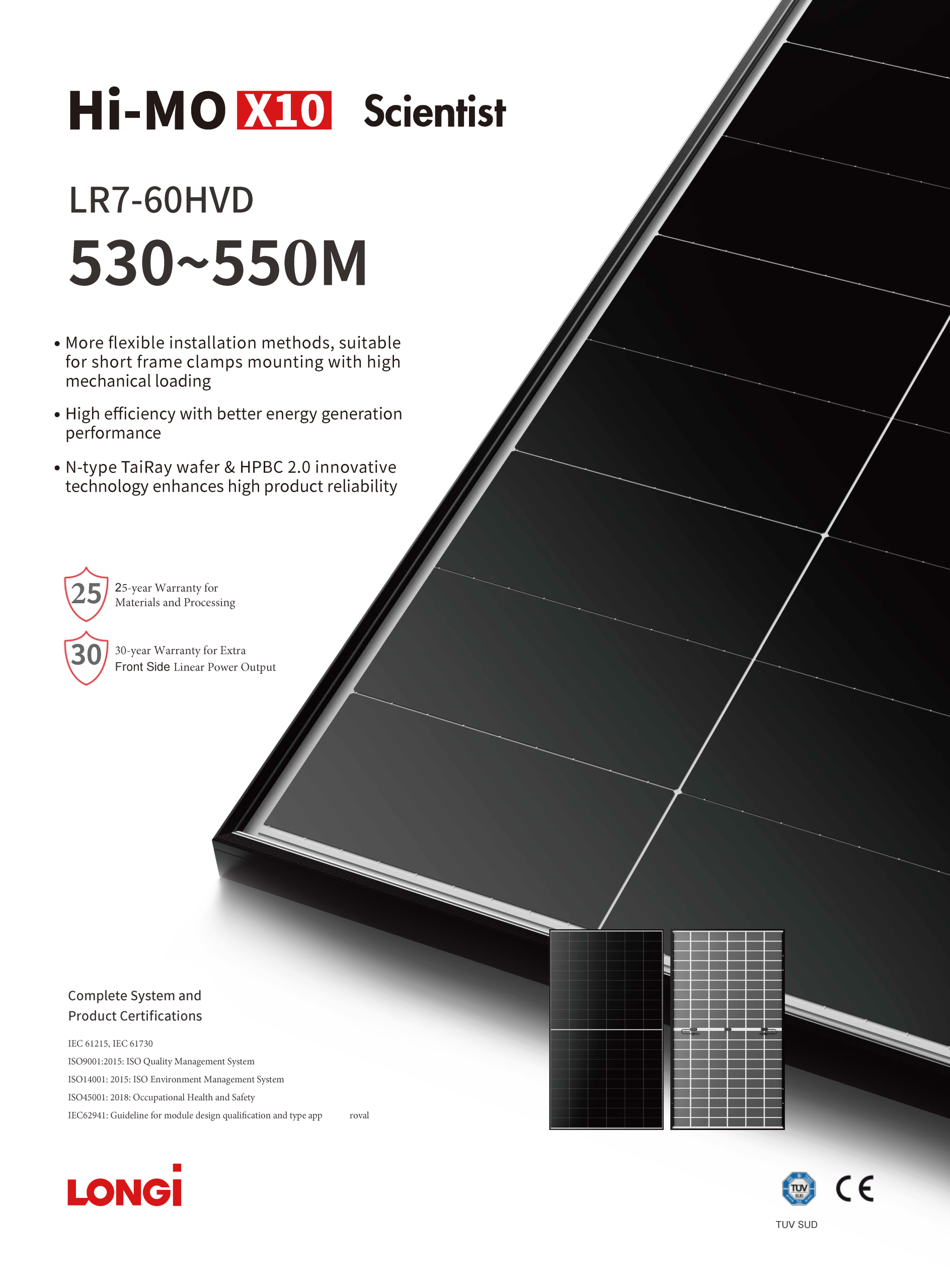
The introduction of the TaiRay wafer marks a distinct shift in how solar panels are built. Conventional square wafers often lead to higher electrical resistance. TaiRay uses a rectangular M11 format that optimises the doping of the silicon. This process increases the mechanical strength of the wafer by 16 per cent.
The refined pulling process ensures TaiRay wafers boast a 53.7 per cent impurity resistance rate compared to the 42.1 per cent baseline of older standard wafers.
One of the greatest hidden risks in solar is the microcrack. Traditional Z-shape welding puts heavy pressure on the edges of the silicon cells during the manufacturing process. This pressure sits at roughly 50MPa.
LONGi’s Max series utilises a back-contact one-line welding structure. This specific engineering choice drops that edge stress down to just 26MPa. In practice, this means your panels are far less likely to develop dead spots after a heavy hailstorm or high wind event in coastal NSW.
Solar Experts at Opera Solar do not rely solely on manufacturer brochures. We review independent data from the PV Evolution Labs (PVEL) and the Renewable Energy Test Centre (RETC). LONGi has been named a Top Performer by PVEL for six consecutive years.
They consistently pass the most rigorous tests, including:
In an outdoor yield test conducted in Davis, California, LONGi’s bifacial modules outperformed the market average consistently. This confirms that the theoretical efficiency of the HPBC technology translates directly into real-world kilowatt hours.
The 2026 range is segmented to meet specific energy demands. For residential roofs in Sydney suburbs like Dural or the Southern Highlands, the focus remains on the 54-cell and 60-cell formats.
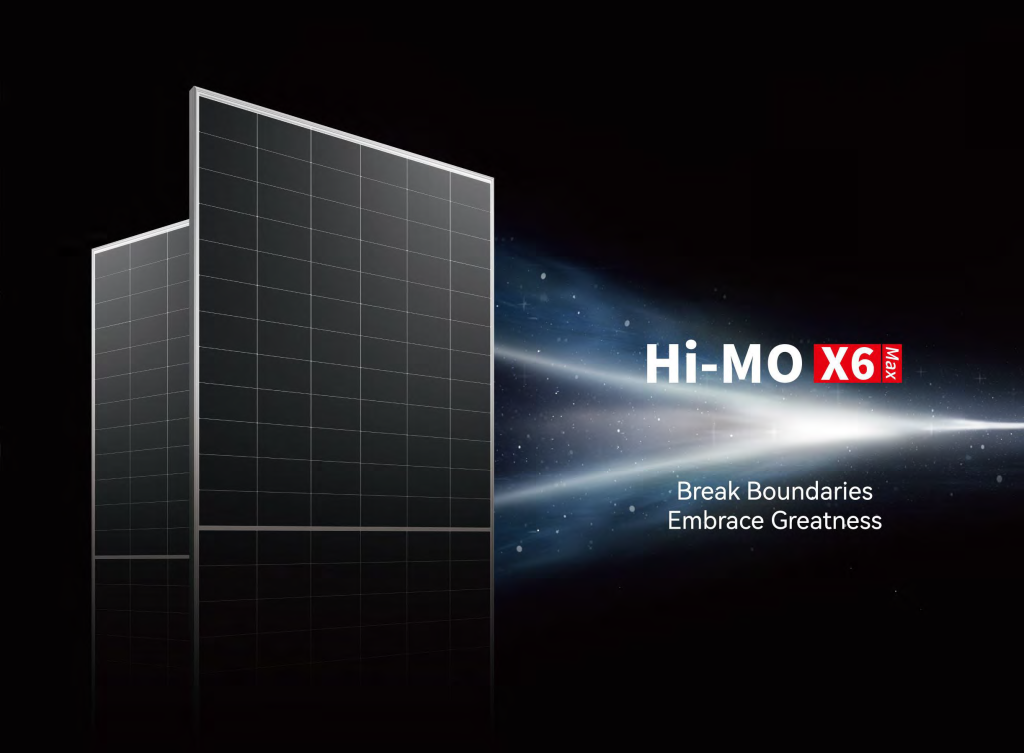
Hi-MO X6 Max: The Residential Standard
The Hi-MO X6 Max series typically ranges from 455W to 470W for standard 54-cell roof formats. It is available in four distinct tiers to suit different buyer priorities:
Commercial Power: Hi-MO 7 and Hi-MO 9
For large-scale industrial projects in Sydney suburbs like Norwest or the Hunter Valley, the Hi-MO 7 and Hi-MO 9 modules are the primary choice.
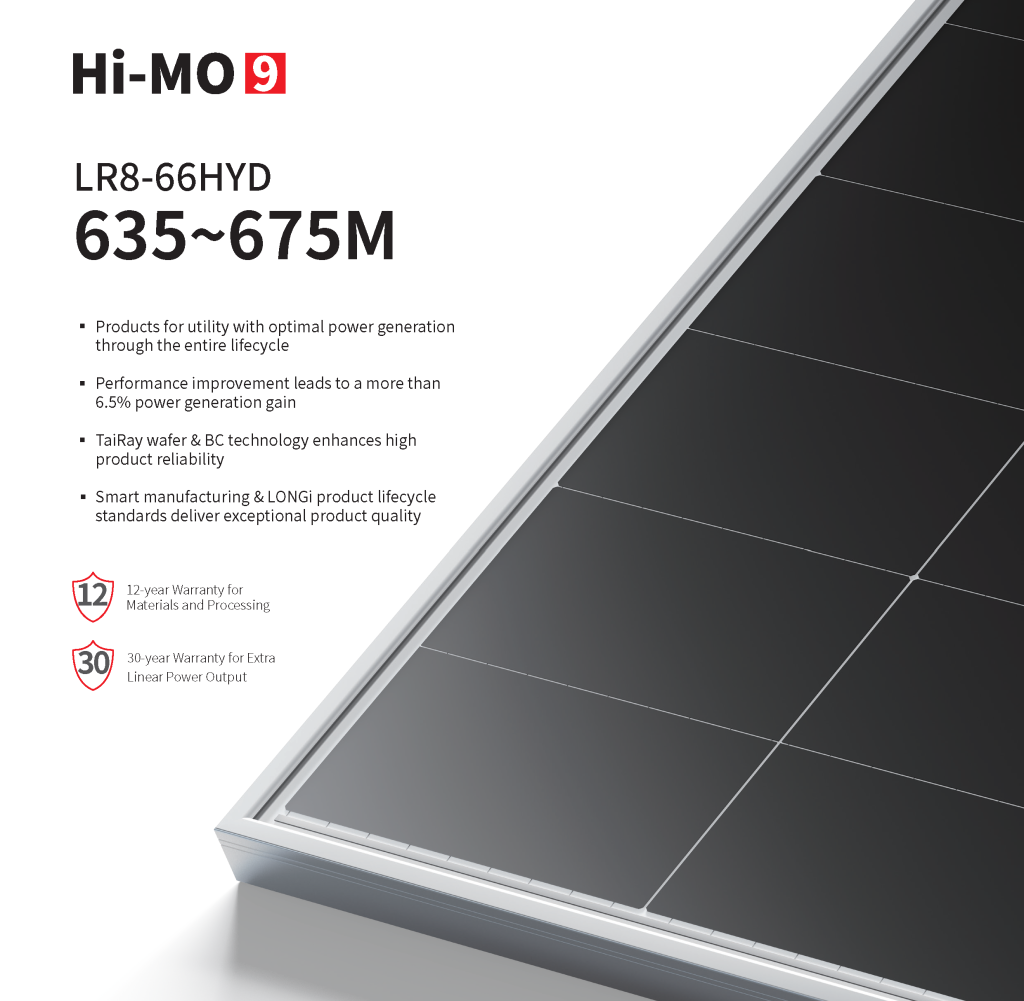
The Hi-MO 9 series pushes power output as high as 675W with a module efficiency of 25.0 per cent. These heavy-duty panels are dual-glass bifacial units, which means they capture light from both the front and the rear surfaces.
When we discuss solar with CFOs and facility managers, the conversation moves beyond the price per panel. We focus heavily on the Balance of System (BOS) costs.
The rectangular M11 wafer size used in the Hi-MO X6 Max allows for better space utilisation inside shipping containers. This results in a 4.1 per cent reduction in transportation costs.
Furthermore, the high density leads to a 3.57 per cent reduction in total BOS costs. By using higher wattage panels, you require less racking, less cabling, and fewer man-hours for installation. The M11 architecture also boasts a 9 per cent reduction in DC cable loss compared to standard 210R formats.
Because LONGi panels feature a documented annual degradation of just 0.35 per cent, the long-term internal rate of return (IRR) is higher than that of standard P-type panels. Your energy yield remains higher for longer. This directly protects the value of the asset on your corporate balance sheet over a 30-year lifecycle.
The Australian environment presents unique challenges for sensitive solar hardware. We deal with extreme UV radiation, salt mist corrosion on the coast, and very high ambient temperatures.
The Anti-Dust Edge Frame
A common issue on flat-pitched commercial roofs is the accumulation of dust and mud at the bottom of the panel frame. This mud pooling creates a shadow that reduces energy generation.
The LONGi Hi-MO X6 Max series features an anti-dust frame specifically designed to solve this issue. This allows rainwater to wash the dust away naturally, reducing the need for expensive manual cleaning schedules.
Heat Tolerance and Cyclone Ratings
With a temperature coefficient of -0.260%/°C on the X10 series, LONGi panels lose less power as they heat up compared to the industry standard of -0.35%/°C.
Additionally, they are rated for 5,400Pa of frontal static load. This strong mechanical rating is essential for withstanding the cyclonic wind pressures found in regional NSW and coastal zones. They are also tested against 25mm hailstones striking at 23 metres per second.
LONGi provides up to a 25 year product warranty and a 30 year performance warranty on their dual glass modules.
The linear performance guarantee is mathematically transparent:
This strict commitment is backed by LONGi’s lifecycle quality standards, which go well beyond the basic IEC baseline requirements for testing and manufacturing.
Choosing between brands requires an objective comparison of their core technologies.
When comparing LONGi to Jinko, you are looking at the two largest players in the industry. Jinko relies heavily on N-type TOPCon technology. While TOPCon is highly efficient, LONGi’s HPBC technology offers a cleaner front aesthetic and a back contact welding structure. For buyers prioritising visual appeal and low-stress cell design, LONGi provides a measurable edge.
JA Solar uses Gapless Flexible Interconnection (GFI) to pack more cells tightly into a frame. LONGi counters this approach with the TaiRay rectangular wafer. The TaiRay method focuses on reducing internal resistance and increasing the physical strength of the silicon wafer itself. LONGi’s approach is preferred for installations where mechanical durability against extreme weather is a primary priority.
When evaluating LONGi solar panels vs Canadian Solar panels, Canadian Solar remains highly competitive on raw project pricing. However, LONGi generally leads in back contact efficiency and architectural aesthetics. Their anti-dust frames and custom coloured Artist series provide specific value for complex builds.
Maxeon has long been the market leader in back-contact solar design. However, LONGi’s HPBC 2.0 now provides similar grid-free aesthetics and comparable high efficiencies. This makes LONGi an accessible option for property owners who want high performance without the price tag of legacy European brands.
A LONGi panel is only as effective as the inverter it is paired with. For high-output 440W to 550W panels, installers must carefully calculate voltage rise and input current. The short circuit current on commercial panels can reach over 16 Amps.
Pairing these heavy-duty modules with a high-capacity string inverter from brands like Fronius or Sungrow ensures that the system handles the electrical current safely. This prevents electrical clipping, which is when the inverter limits power because it cannot process the peak solar output.
For residential estates with complex roof lines, microinverters from Enphase are often the better engineering choice. This allows each LONGi panel to operate completely independently. If one panel is partially shaded by a chimney or a tree branch, the rest of the array continues operating at maximum generation.
The transition to a high-efficiency energy system is a significant financial decision. LONGi Solar has proven that its technology is not just about raw wattage. It is fundamentally about the long-term integrity of the silicon and the reduction of internal electrical stress.
Whether you are a facility manager looking to reduce BOS costs with high-density shipping or a homeowner in Sydney seeking a clean roof aesthetic, the 2026 LONGi range provides an engineered solution. Consult with the engineers at Opera Solar to design a custom LONGi array tailored perfectly to your roof, and take control of your energy costs today.
Yes, they are the industry leader in monocrystalline technology. Their HPBC 2.0 architecture and complete vertical integration make them highly reliable and efficient.
The initial capital cost is higher than that of entry-level budget panels. Additionally, the sheer number of product variations (Explorer, Scientist, Guardian, Artist) can be confusing to navigate without an advisor.
They are manufactured in highly automated facilities in China, Vietnam, and Malaysia. Their manufacturing bases are globally recognised for high standards of quality control.
They perform exceptionally well. The low temperature coefficient means they lose less voltage during hot days compared to traditional panels. The Hi-MO 9 features a coefficient of -0.260%/°C, maintaining high energy yields during the Australian summer.
While the LONGi solar panels price varies depending on the installer and system size, they are positioned as a high-value product. They offer excellent performance at a price that remains competitive with other major Tier 1 brands.
Yes. LONGi modules pass the rigorous IEC 61701 salt mist corrosion test. This makes them perfectly suitable for properties near the shoreline, provided the mounting hardware is also rated for coastal environments.
For commercial roofs with a low pitch angle, yes. It reduces the accumulation of thick dirt along the frame edge. This means your system generates more power between manual cleanings.
The 30-year performance warranty indicates that the hardware is built for a three-decade lifespan. With proper maintenance and a high-quality installation, these systems often continue to operate efficiently well beyond their official warranty period.
Both are excellent Tier 1 brands. LONGi focuses on back contact aesthetics and high mechanical strength using TaiRay wafers. Jinko focuses on TOPCon technology. Your choice depends entirely on whether you value grid-free looks over specific low-light benchmarks.
Panels exceeding 540W are physically larger and generally better suited for flat commercial roofs. Reading a LONGi 440W solar panels review shows that the 440W to 470W models are perfectly optimised for the structural footprint of a standard residential property.
They are heavily tested to withstand 5400 Pascals of frontal static loading and 2400 Pascals of rear loading. This ensures they survive severe cyclonic wind conditions across Australia.
Because the latest Hi-MO series pushes high electrical currents, your installer must select compatible hardware. High-capacity string inverters or microinverters are recommended to avoid electrical clipping and ensure safe operation.