
For property owners researching premium renewable energy hardware, reading a comprehensive Aiko solar panels review is essential. Shanghai Aiko Solar has transformed the Australian renewable market with its Generation 3 Infinite panels. By utilising advanced All Back Contact (ABC) technology, they successfully removed the silver grid lines from the front of traditional solar cells. This creates a pure black surface that absorbs maximum sunlight, allowing AIKO to achieve world-record module efficiencies exceeding 25 per cent.
Key Takeaways for AIKO Solar in 2026:
The Australian renewable energy sector is highly competitive. For years, homeowners exploring top-tier installations defaulted to a few established legacy brands. However, the premium hardware market shifted dramatically when AIKO launched its proprietary modules.
A common consumer concern is that AIKO is too new to the Australian market. Buyers often worry that the brand lacks a multi-decade local track record compared to legacy competitors. This is a very valid question, but a deeper look at their corporate history provides absolute reassurance. Shanghai Aiko Solar was founded in 2009. They are an undisputed industry heavyweight.
Before launching their own branded panels in 2022, AIKO manufactured over 130 gigawatts of solar cells for other famous global brands. They are the original engineering muscle behind many popular products. They officially launched their Aiko solar panels Australia division in 2024 and established a local Melbourne headquarters. This provides Australian consumers with direct, highly responsive warranty support.
If you are comparing an Aiko vs Jinko quotation, you are likely wondering if the premium pricing is justified. This objective technical guide breaks down the exact science behind the 2026 Gen 3 hardware. We will explore their new copper interconnections and extreme efficiency to help you determine if AIKO is the correct fit for your property.
To truly appreciate why these panels perform so well, we must examine standard solar cell construction. Traditional panels rely on thin silver lines running across the front of the glass. These grid lines are necessary to carry the electrical current. However, they actively block a portion of sunlight from hitting the active silicon beneath them.
AIKO resolved this physical limitation with their Infinite ABC technology. ABC stands for All Back Contact. Their engineers successfully moved every single electrical contact to the rear side of the solar cell. The front of an Aiko ABC solar panel module is completely unobstructed. It acts as a maximum sunlight sponge.
Zero-Gap Cells and Copper Interconnections
The 2026 Generation 3 panels feature an advanced design known as the Infinite series. AIKO introduced a zero-gap cell layout to maximise output. Standard panels always feature a tiny amount of dead space between the individual square solar cells. AIKO utilises precise overlap soldering to eliminate this dead space.
Furthermore, AIKO has completely replaced traditional silver paste with their proprietary InvisiRibbon copper interconnections. Silver is highly expensive and prone to thermal fatigue. Copper is a vastly superior electrical conductor. It handles high currents much more efficiently and runs significantly cooler under heavy loads. This critical copper upgrade drastically reduces the risk of internal microcracks developing over a 30-year lifespan.
Breaking the 500W Barrier (Under 2m²)
For many years, the holy grail of residential solar engineering was reaching 500 watts of power without creating an oversized panel. Budget brands often advertise 500W modules, but they are usually massive commercial slabs. These giant panels measure well over two metres long, making them heavy and highly difficult to fit efficiently on complex residential roofs.
Because AIKO Gen 3 ABC cells achieve world record efficiencies over 25 per cent, they generate more power per square centimetre. This allows AIKO to comfortably pack 500W of generation capacity into a standard residential frame. This space-saving advantage means you can fit a much larger total system size onto a compact suburban roof.
AIKO deliberately avoids manufacturing a confusing catalogue of hundreds of similar panels. They have streamlined their 2026 product range into specific, highly optimised tiers designed for precise architectural applications.
Are you a homeowner or a business?
Neostar 3P and 3S: The Standard Powerhouses
The Neostar series is the flagship residential product line in Australia. The Neostar 3P is the absolute powerhouse of the range. Generating up to 500W, it utilises a white backsheet or subtle white striping. This reflects light internally, pushing the module to yield the maximum possible electricity.
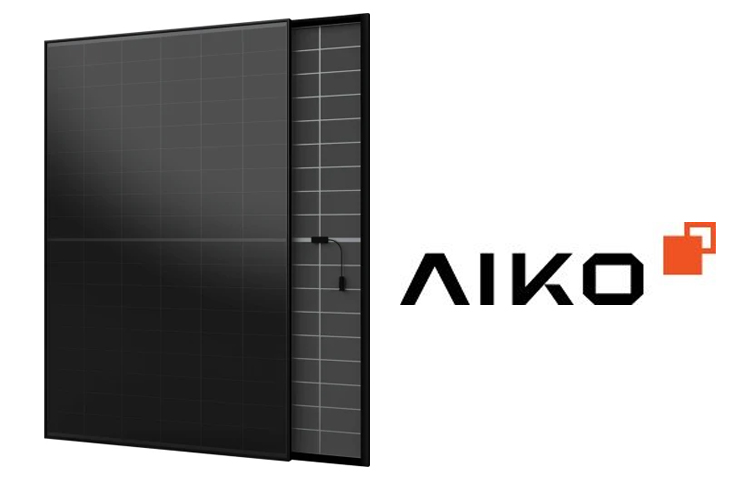
If pure aesthetics are your primary concern, the Neostar 3S is the premium architectural alternative. It is a stunning, flawless all-black panel. It sacrifices a tiny fraction of peak power, maxing out at around 475W to 485W. The sleek, uniform dark finish makes it highly favoured for a visually perfect roofline.
Neostar 60-Cell: Maximising the Residential Limit
For homeowners demanding the absolute highest output per module, AIKO introduced the Neostar 60-cell variant. This newly approved residential panel pushes domestic roof limits to an incredible 545W or more.
It achieves this massive power output by slightly increasing the physical footprint to approximately 1.95 metres long. While slightly larger than the standard 500W Neostar, it drastically reduces the total number of physical panels required. This streamlines the visual aesthetic for large residential properties.
Commercial solar presents a unique structural engineering challenge. AIKO provides three specific industrial solutions designed for businesses with massive energy demands.
Australia possesses one of the most brutal climates on earth for sensitive electronic equipment. Searing summer heat, coastal salt mist, and sudden hailstorms actively degrade budget solar hardware. AIKO engineered its Gen 3 panels specifically to thrive in these hostile environments.
Exceptional Heat Tolerance (-0.26%/°C)
Solar panels naturally lose efficiency as their internal temperature rises. This performance drop is measured by a metric called the temperature coefficient. A standard TOPCon panel from a cheaper brand typically has a coefficient of negative 0.29 per cent per degree Celsius.
AIKO panels boast an industry-leading temperature coefficient of negative 0.26 per cent per degree Celsius. When an Australian roof reaches 60 degrees during a scorching heatwave, the AIKO panel drops significantly less power than its competitors. Over an entire summer, this superior thermal stability translates to hundreds of extra kilowatt hours generated for your property.
Superior Hail and UV Resistance
To protect the valuable copper and silicon internals, AIKO uses heavily tempered front glass. Their dual glass configurations sandwich the delicate solar cells between two highly robust transparent layers. This provides exceptional mechanical strength against extreme wind loads and severe hail impacts.
Coastal environments also require specific engineering oversight. For coastal homes located within 500 meters of the beach, panels must have a specific anti-corrosion treatment applied. Furthermore, local installation guidelines dictate that these coastal panels must be tilted at least 10 degrees. This minimum tilt ensures heavy rain can effectively wash away corrosive salt buildup.
We are rapidly entering the era of the fully electrified home. Australian households are replacing gas appliances with electric heat pumps, installing high-capacity home batteries, and purchasing electric vehicles. This massive shift in consumer behaviour means the average household’s daily electricity demand is skyrocketing.
To power an electric vehicle and charge a home battery simultaneously, a standard 6.6kW solar system is simply no longer sufficient. Modern homes require massive 10kW or 13kW solar arrays. The primary problem is that most suburban roofs simply do not have the physical square meterage to fit that many standard panels.
This is where AIKO’s high-efficiency ABC technology becomes a highly advantageous financial asset. Furthermore, AIKO panels boast a distinct low-light wake-up advantage. Their highly sensitive cells turn on earlier in the morning and stay active later in the afternoon. This extended generation window ensures your roof produces maximum power during the exact hours your family needs it most.
When you invest in premium renewable hardware, you are buying long term peace of mind. A solar panel is only as reliable as the corporate warranty standing behind it. AIKO provides one of the strongest and most mathematically transparent warranty structures currently available in the Australian market.
The 25-Year Product Warranty
The product warranty protects you against physical manufacturing defects. If the tempered glass delaminates, the aluminium frame warps, or the internal copper InvisiRibbon fails prematurely, AIKO will replace the panel. AIKO offers a highly confident 25 year product warranty on their core residential Neostar range. Because they maintain a local headquarters in Melbourne, Australian consumers enjoy highly responsive domestic support.
The 30-Year Performance Promise (Over 88% Yield)
All solar panels slowly degrade over time. The performance warranty guarantees exactly how much electricity the panel will still produce decades from now. AIKO drastically exceeds standard industry benchmarks by providing a strict 30 year performance warranty.
The mathematical degradation curve is highly specific. AIKO guarantees a maximum degradation of just 1 per cent in the first year of operation. After that initial period, the panel will degrade exactly 0.35 per cent each year. This precise calculation means they officially guarantee the panel will retain at least 88.85 per cent of its original generation capacity at year 30.
No solar hardware is absolutely perfect for every single scenario. As an objective advisor, it is vital to weigh the specific advantages and technical drawbacks before committing to a premium installation.
The Pros:
The Cons:
Who Should Not Buy AIKO:
Homeowners on extremely tight budgets looking for the absolute cheapest system possible should avoid premium ABC panels. A standard budget system may achieve positive cash flow faster for those with very low energy usage. Additionally, commercial buildings with strong roofs should not purchase the expensive Nebular series, as standard glass modules are far more cost effective for normal commercial structures.
The Australian solar industry is evolving rapidly. The technology on your roof must be capable of supporting your future household energy needs. As we transition toward electric vehicles and high-capacity home batteries, maximising the power output of every single square metre of your roof is no longer just a luxury.
AIKO has proven that its All Back Contact technology is a legitimate engineering breakthrough. By completely redesigning the solar cell, eliminating front-side shading, and pioneering advanced copper interconnections, they have created a product that actively outperforms traditional hardware. The Gen 3 Neostar series delivers exceptional heat tolerance, stunning aesthetics, and a massive 500W output in a highly manageable residential footprint.
While the upfront cost is higher than standard budget panels, the long-term mathematical output may achieve positive cash flow and superior savings for high-demand households. A panel that degrades at exactly 0.35 per cent per year, survives harsh Australian heatwaves, and carries a robust 30-year performance guarantee is a highly attractive proposition.
If you are researching the best solar panels Australia 2026 has to offer, AIKO is undeniably one of the most formidable brands on the market today. Contact a trusted solar strategist to design a custom AIKO array tailored perfectly to your roof, and discover exactly how much power your home is truly capable of generating.
When researching high end solar infrastructure on forums like Whirlpool and Reddit, consumers naturally have highly specific technical questions. Here are the clear, objective answers to the ten most common concerns regarding AIKO hardware.
Yes, they handle partial shade exceptionally well. We can use the analogy of a kinked garden hose to explain this. Standard string solar acts like a kinked hose. If shade hits one single cell, the energy flow of the entire panel chokes. AIKO features advanced cell isolation. The panel isolates the shaded spot, allowing the electrical current to flow freely around it and maintain high power output.
This choice depends on your preference for aesthetics versus raw power. If you want the absolute maximum energy generation possible, choose the Neostar 3P. Its white backsheet reflects light internally to boost wattage up to 500W. If your panels are highly visible from the street and you want a flawless architectural look, the all-black Neostar 3S is the superior choice.
No, they are actually perfectly sized. This is the main advantage of AIKO extreme 25 per cent efficiency. While budget 500W panels are massive commercial slabs that are difficult to fit on domestic roofs, the AIKO Neostar series achieves 500W within a compact footprint of under two square metres. They are highly manageable for installers and fit neatly on suburban roofs.
Silver paste is the traditional industry standard, but it limits electrical flow and suffers from thermal fatigue. AIKO completely removed silver and introduced InvisiRibbon copper interconnections in their Gen 3 panels. Copper is a vastly superior electrical conductor. It carries high currents with much less resistance, meaning the panel runs significantly cooler and avoids microcracks over its 30-year lifespan.
Dual glass panels offer superior long-term mechanical durability. By sandwiching the delicate solar cells between two robust sheets of tempered glass, the panel gains massive strength against wind and severe hail. It also provides ultimate protection against moisture ingress over decades of operation. While they are slightly heavier, the added reliability makes dual glass highly advantageous for Australian weather conditions.
Yes, but strict engineering oversight is required. Because AIKO panels push out exceptional voltage and high current, you cannot pair them with a cheap or undersized inverter. Your solar installer must calculate the exact string voltages to ensure the inverter can process the massive energy flow safely. Pairing AIKO panels with premium inverters yields phenomenal long term results.
Absolutely, but specific rules apply. For coastal homes located within 500 meters of the beach, panels must have a verified anti-corrosion treatment. Furthermore, installation guidelines dictate that the panels must be tilted at least 10 degrees. This minimum tilt ensures heavy rain can effectively wash away corrosive salt buildup and protect the aluminium frame.
While technically possible, it is highly unnecessary for standard residential homes. The Nebular series is an 8.6kg glass-free panel designed strictly for weak commercial and industrial buildings that cannot support standard weight. Standard Australian residential roofs easily support the 22kg weight of normal Neostar glass panels, which are far more cost-effective.
No, they are highly unsuitable for domestic installations. At over 2.3 metres long and weighing significantly more than residential modules, they are simply too large and unsafe to manoeuvre on a standard pitched house roof. These panels are strictly engineered for heavy commercial applications where specialised lifting equipment is used.
The primary difference is exactly how they capture sunlight. The Comet series is monofacial, meaning it only generates power from the front side. It is ideal for flat, flush-mounted commercial roofs. The Stellar series is bifacial. It captures direct sunlight from the front and reflected ambient light from the back, making it highly advantageous for tilted commercial racks.
Upgrading an older system requires careful physical measurement. The new 545W Neostar panels are approximately 20 centimetres longer than legacy panels manufactured five years ago. Therefore, they are rarely a simple drop-in replacement on tight roofs. However, for brand new installations or complete system overhauls, they offer a flawless way to maximise your total energy generation.
They are actually easier to maintain. Because the All Back Contact design removes the raised silver busbars from the front of the panel, the glass surface is completely smooth and uniform. This means dust, pollen, and bird droppings have fewer ridges to cling to. When it rains, the water sheets off the smooth surface more effectively.
You are paying for cutting-edge research and raw technical superiority. Budget panels use older technology with cheap silver paste. AIKO invests heavily in proprietary zero gap soldering, copper InvisiRibbon wiring, and complex ABC cell architecture. This premium manufacturing process creates a panel that generates significantly more power per square metre, making it highly advantageous over the long term.