
For property owners researching premium renewable energy hardware, a comprehensive Jinko Solar panel review tailored for Australia is the absolute best place to begin. Jinko Solar is a global Tier 1 manufacturing giant holding an impressive 18 per cent global market share. They have disrupted the local renewable sector with their Generation 3 Tiger Neo solar panels. By utilising advanced N-Type TOPCon technology, they minimise internal energy loss and achieve maximum conversion efficiencies exceeding 23 per cent at the cell level.
Key Takeaways for Jinko Solar in 2026:
The Australian solar landscape is flooded with dozens of competing manufacturers. This makes choosing the right hardware highly confusing for the average consumer. Homeowners frequently seek a balance between cutting-edge performance and a highly reasonable price tag. Jinko Solar has successfully captured this exact middle ground.
They are a massive global Tier 1 manufacturer, having delivered over 260 gigawatts of solar panels worldwide. They are highly trusted across Australia for both giant utility solar farms and everyday suburban roofs.
Their popularity stems from their relentless focus on research and development. Rather than resting on legacy technology, Jinko aggressively commercialised its Tiger Neo Gen 3 hardware. This specific range forces competitors to completely rethink their own product lines.
If you are comparing quotations and looking for an objective Tiger Neo solar panels review, you are in the right place. This guide strips away the marketing jargon. We will explain exactly how their 2026 technology operates, what size panels fit your roof, and how they handle the brutal Australian climate over a 30-year lifespan.
To truly understand why Jinko panels perform so well, you must look inside the actual solar cell. For many years, the global solar industry relied on older P-Type technology. While highly cost-effective at the time, older panels suffered from noticeable energy loss and faster degradation.
Jinko completely bypassed these old limitations with their Tiger Neo Gen 3 series. They transitioned their entire premium lineup to N-Type TOPCon cell structures. This represents a massive leap forward in standard photovoltaic engineering.
Understanding N-Type TOPCon Cells
TOPCon stands for Tunnel Oxide Passivated Contact. Inside a standard solar cell, sunlight excites electrons to create an electrical current. However, in older panels, many of these electrons recombine internally. They are lost as useless heat before they can even exit the panel.
Jinko solves this by placing an ultra thin tunnel oxide layer at the rear of the cell. Think of this microscopic layer as an intelligent gatekeeper. It allows the valuable electrical current to pass through easily while actively blocking the electrons from recombining. This drastically reduces internal energy loss and pushes cell-level efficiencies toward 27 per cent.
The Passivation Layer Advantage
This passivation layer is the secret to long-term durability. Because N-Type TOPCon cells are fundamentally more stable than older architectures, they suffer from significantly less Light Induced Degradation.
When you expose a brand-new panel to harsh Australian UV radiation, it usually drops slightly in performance during the first few weeks. The superior passivation in the Tiger Neo series minimises this initial shock. It ensures your system begins generating maximum power immediately and maintains that high-performance trajectory for decades.
One of the most critical factors in modern solar design is how a panel performs when the sun is not perfectly bright. Australian households are heavily focused on self consumption to run heat pumps and charge home batteries. You need power early in the morning and late in the afternoon.
Generating Power on Cloudy Days
Jinko has earned a reputation as a low-light champion. Standard panels often shut down or drop their output dramatically the moment heavy clouds roll in. The Tiger Neo Gen 3 panels are specifically engineered to harvest scattered and diffused sunlight highly effectively.
This means your system wakes up earlier in the morning and stays active much later into the evening. This extended generation window is highly valuable. It ensures you have a steady trickle of usable power during those critical hours when your family is actually using electricity.
Optimised Leakage Current Paths
The technical reason behind this superior cloudy day performance is Jinko’s optimised leakage current paths. In every solar panel, a tiny amount of electrical current leaks backwards, which reduces overall power output.
Jinko engineers successfully redesigned the internal circuitry to push this leakage current to the extreme outer edges of the cell. By managing this leakage efficiently, the panel wastes significantly less power internally when sunlight is weak. This precise physics is exactly why Tiger Neo panels generate more usable electricity during heavy overcast weather.
Jinko produces a highly diverse catalogue of hardware. Understanding the specific physical sizing variations is crucial for a successful residential or commercial installation.
Are you a homeowner or a commercial operator?
For the domestic market, physical size and aesthetic appeal are incredibly important. The residential range is split into two primary categories based on cell count.
The 54-cell Tiger Neo series is the most popular choice for standard Australian homes. These panels output between 435W and 460W. If you are specifically looking for a highly reliable 440W or 475W Jinko solar panel, this compact series is highly manageable for installers and fits perfectly around roof vents.
For energy-hungry households with slightly larger roofs, Jinko offers the 60-cell variant. These slightly larger panels push domestic boundaries from 480W up to an impressive 510W. Finding 500W Jinko solar panels for a residential home means you need fewer total panels on your roof to achieve a massive total system capacity.
Aesthetically, the Tiger Neo 54HL4R-B offers a sleek, pure all-black design. This visually flawless panel is highly sought after by homeowners wanting a premium, seamless look on their roofline.
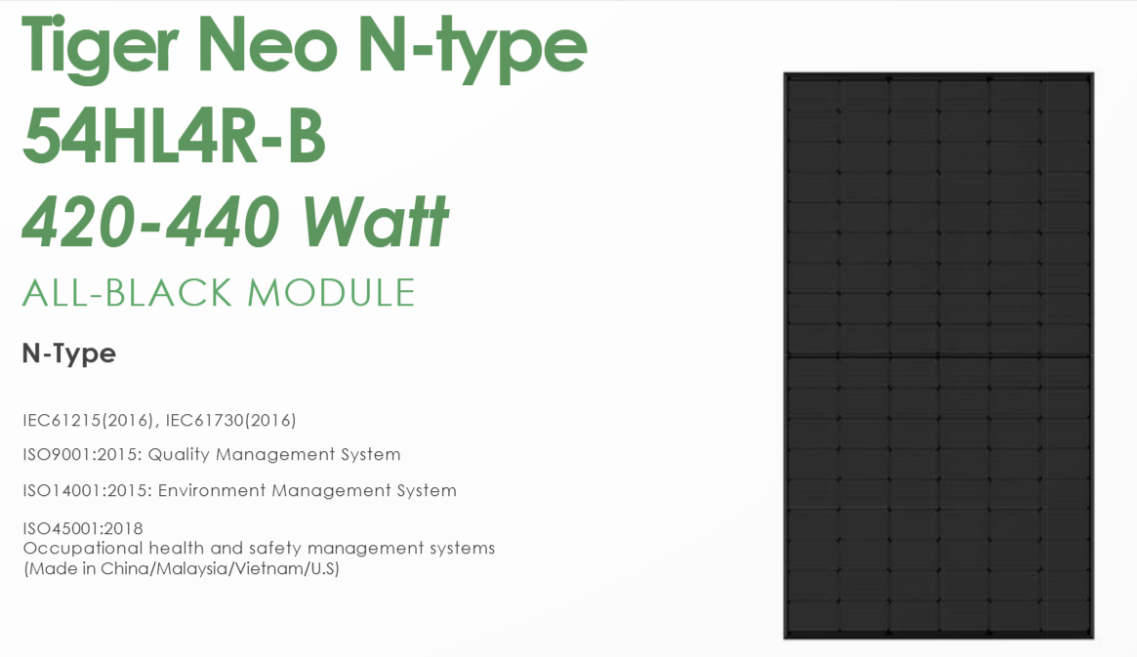
Commercial solar requires maximum raw output. Jinko produces massive high-wattage panels specifically engineered for utility-scale farms and industrial warehouses.
These industrial modules include 605W, 630W, and 645W options. If a facility manager is searching for a 600W Jinko solar panel range, these heavy-duty modules deliver incredible economies of scale.
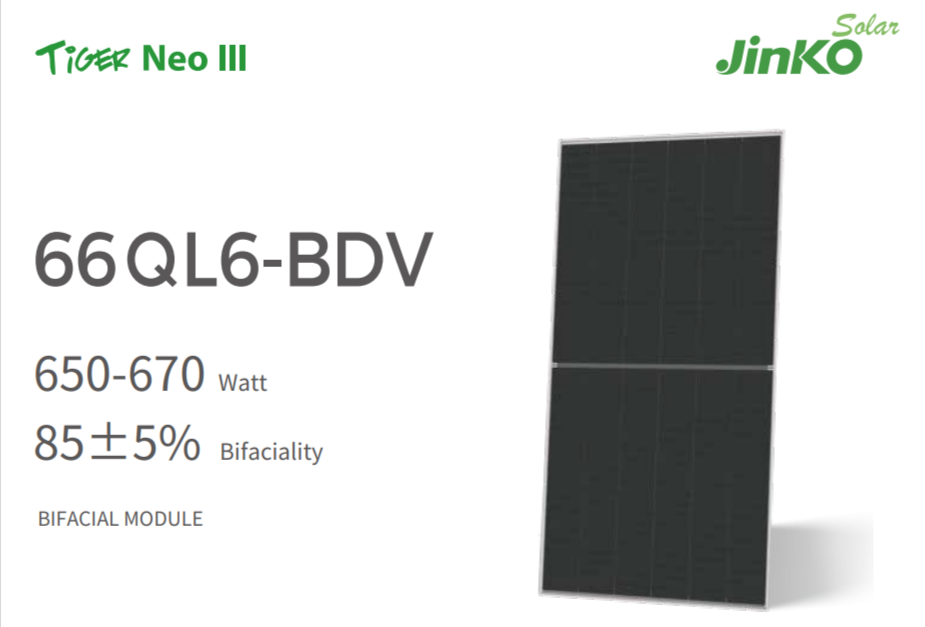
At the absolute top of the tier is the giant 720W panel. These massive units are well over two metres long and weigh significantly more than residential panels. They are strictly designed for heavy commercial racks and ground mounted utility farms. They are never to be installed on a standard suburban house roof.
Installing premium hardware is useless if it cannot survive the local environment. Australia presents a brutal mix of extreme summer heat, violent storms, and corrosive coastal salt mist. Jinko has heavily tested their Gen 3 hardware to ensure it handles these precise extremes.
Solar panels naturally lose efficiency as they heat up. This inevitable performance drop is measured by the temperature coefficient. Standard panels typically suffer a coefficient of negative 0.35 per cent per degree Celsius.
The Tiger Neo series features an exceptional temperature coefficient of negative 0.29 per cent per degree Celsius. This means that during a scorching 40-degree Australian heatwave, the Jinko panel runs significantly cooler than a cheaper rival. This superior thermal stability actively translates to 4 to 5 per cent more electricity generation during the hottest days of the year.
Many Australians live right on the coastline. Salt mist is highly corrosive and can destroy the internal wiring of a solar panel very quickly. Jinko panels carry high certifications for salt mist resistance, but they strictly enforce installation rules to protect their warranty.
If you live near the ocean, your panels must be installed at least 50 metres away from the direct shoreline. Furthermore, coastal panels absolutely must be installed at a minimum tilt of 8 to 10 degrees. This specific tilt ensures that heavy rainfall can effectively wash away accumulated salt from the aluminium frame and glass surface.
Investing in renewable energy requires total confidence in the manufacturer. A solar system is a multi-decade investment. Jinko provides one of the most reliable and mathematically transparent warranty structures currently available to Australian consumers.
The 25 Year Product Warranty
The product warranty protects you against physical manufacturing defects. If the tempered glass fails, the frame warps, or the internal wiring malfunctions due to factory errors, Jinko will step in.
Jinko provides a highly robust 25 year product warranty on their premium Tiger Neo residential range. Because they maintain a massive local corporate presence in Australia, warranty claims are handled domestically. You do not have to fight with complex overseas supply chains to receive professional support.
The 30 Year Performance Promise
All silicon solar cells degrade over time. The performance warranty guarantees exactly how much power the panel will still produce decades into the future.
Jinko officially guarantees that their Gen 3 N-Type panels will retain at least 87.4 per cent of their original generation capacity at the end of year 30. This ultra-low degradation rate is mathematical proof that their TOPCon cell structure and superior passivation layers truly protect the hardware from premature ageing.
No hardware is completely perfect for every single scenario. As an objective advisor, it is critical to weigh the distinct advantages against any potential drawbacks before committing to an installation.
The Pros:
The Cons:
The transition to clean household energy is one of the smartest financial decisions an Australian homeowner can make. As families upgrade to electric vehicles and home battery systems, ensuring your roof generates maximum power in all weather conditions is highly critical.
Jinko Solar has proven that its Tiger Neo Gen 3 hardware is not just a marketing exercise. By fully embracing N-Type TOPCon technology, they have created a panel that legitimately outperforms older legacy hardware. Their exceptional low-light generation, robust heat tolerance, and vast sizing options make them a highly versatile choice for almost any property.
While coastal residents must carefully adhere to specific installation rules, the vast majority of Australian homes will benefit massively from this technology. A panel that degrades slowly, survives scorching heatwaves, and carries a robust 30-year performance guarantee provides incredible peace of mind.
If you want Tier 1 performance without paying an inflated premium price tag, Jinko Solar is undeniably one of the most strategic hardware choices on the market today. Contact an objective solar expert to design a custom Tiger Neo array tailored perfectly to your roof, and take control of your energy bills today.
When consumers research high-value hardware on forums like Reddit, they demand objective answers. Here are the clear, factual responses to the ten most common concerns regarding Jinko Solar.
Yes, they are highly exceptional. When evaluating Jinko versus Canadian Solar, both are respected Tier 1 brands. However, Jinko often leads in widespread N-Type TOPCon deployment, offering slightly better heat tolerance and low-light performance. Canadian Solar remains highly competitive on price, making both brands fantastic options depending on your budget.
Pricing is highly dependent on your chosen installer and location. However, a fully installed premium 6.6kW Jinko Tiger Neo system generally ranges between $4,500 and $6,000. This price bracket makes them highly cost-effective compared to ultra-premium European brands while delivering very similar technological performance.
When investigating real-world reviews and complaints, issues rarely relate to actual hardware failure. Most complaints stem from poor workmanship by cheap third-party installers. Another historical complaint involved older P-Type panels degrading faster than expected, which Jinko completely resolved by upgrading to the highly durable Gen 3 N-Type technology.
This depends entirely on your available roof space. Standard 440W panels are physically smaller and perfect for complex roofs with many obstacles. The 500W options are slightly longer but require fewer total panels to reach your target system size. The 600W and 720W panels are strictly for commercial industrial roofs and should never be used on domestic houses.
In simple terms, it means more electricity generation per square metre. The TOPCon tunnel oxide layer actively prevents electrons from getting lost internally as heat. By forcing more electrical current out of the panel and into your home, you generate more usable power every single day. This highly efficient process may drastically reduce your reliance on expensive grid electricity.
Yes, they perform exceptionally well in poor weather. Jinko is widely considered a low light champion. Their engineers redesigned the internal circuitry to push leakage currents to the outer edges of the cell. This precise engineering ensures the panel wastes very little energy, allowing it to harvest scattered sunlight highly effectively during overcast days.
You must exercise extreme caution. According to Jinko’s strict coastal rules, panels must be installed at least 50 metres away from the direct shoreline to maintain the warranty. Furthermore, they absolutely must be tilted at 8 to 10 degrees so that rain can naturally wash away corrosive salt buildup. If you live 10 metres from the surf, these panels are not suitable.
They handle heat incredibly well. Standard panels lose significant power when they get hot. Jinko Tiger Neo panels feature a highly premium temperature coefficient of negative 0.29 per cent per degree Celsius. This means they run significantly cooler than cheaper alternatives, ensuring you generate maximum electricity during blistering January heatwaves.
This is a choice between pure aesthetics and maximum yield. The Tiger Neo all-black panels offer a flawless, premium architectural look that modern homeowners love. However, the standard panels with a white backsheet or bifacial design reflect light internally to squeeze out a few extra watts of power. Choose black for looks, or standard for raw output.
Yes, they are highly reliable. Unlike cheap imported brands that vanish overnight, Jinko is a global manufacturing giant with an 18 per cent global market share. They maintain a massive corporate headquarters right here in Australia. If you ever need to claim your 25-year product warranty or your 30-year performance promise, you are dealing with a secure, domestic support team.